Subverting Expectations and Story Structure, or How to Earn Your Plot Twists.

Submitted by: Johnathon Wilson

One of the most important things about storytelling is being aware of the audience’s expectations, and then either fulfilling them or subverting them depending on the story.

You can all but guarantee that a Hallmark movie is going to be a paint-by-the-numbers three act story, where the protagonist and their love interest have a miscommunication at the end of act two that’s resolved in act three. That being said, people watch the crap out of those because sometimes people want the safety and familiarity of knowing what they’re going to get.

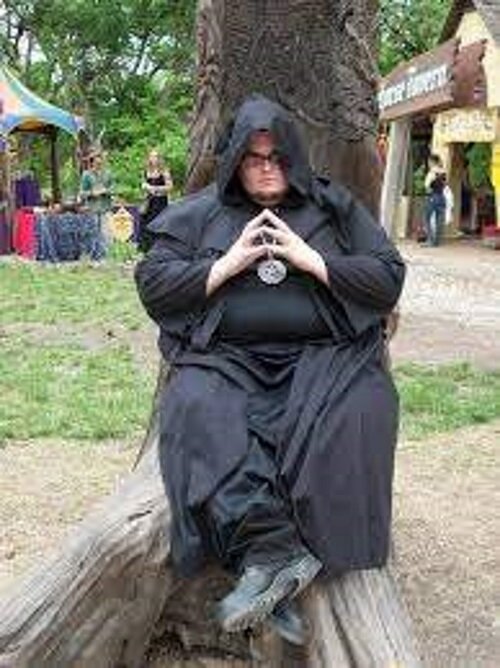
“Your genital warts enhance my pleasure. I WILL marry you!”

“Your genital warts enhance my pleasure. I WILL marry you!”

While I may personally want every romantic comedy to take a hard turn into sci-fi or horror, not everyone does, and that’s ok. It all comes down to knowing what your audience wants and then giving it to them, which is why I stress how important it is to know your audience before you do anything else.

When you have an idea of what your table is looking for, you can figure out how to give it to them, while also surprising them and keeping them excited. A lot of the how is going to depend on your players, and how much meta-knowledge they have about D&D in general. For instance, my players know a lot about the game and the books that accompany it. They’re familiar with various monsters' strengths/weaknesses, as well as the relative threat levels of said monsters, so I end up mixing in a bit of re-flavoring of monsters to catch them by surprise. This isn’t always necessary, and I’ll talk about how encounter design and dynamic terrain can keep combat fresh for even the most seasoned players in a future post. Now, let’s take a look at how to be aware of expectations on a macro level for your games.

When I say macro level, what I mean is the broader concept of your game and what kind of overall story is being told. It can help to be familiar with story-telling arcs in literature, but isn’t strictly necessary to run a fun game. For instance, most hero-based stories follow a common narrative arc where the hero overcomes challenges to grow and be better than they were at the beginning of the story. This occurs through establishing a baseline for the hero, introducing a catalyst (they find out they’re the chosen one, have latent magical powers, receive an offer they can’t refuse etc.), then the hero grows in power until they experience a major setback, which they then overcome in act three to complete their journey.

“At long last, I can jerk off with my left hand.”

“At long last, I can jerk off with my left hand.”

I mention this because even if we can’t all articulate it, these are story beats we are all intimately familiar with. We have expectations that we’ve been taught for decades through every media source, and it can be helpful as a DM to take the time to consider where your story is at and where it’s going.

If you can successfully identify what kind of story your game has become, then you can also fundamentally alter that trajectory and surprise your players. I will say that big shifts like this are tougher than smaller level subversions, and require more preparation, but are still possible. Completely changing the course of a story/game like that requires that your players trust you, because depending on the execution it could feel cheap. To avoid this I would recommend only trying such dramatic shifts with more experienced players, or at the very least players who you have established a deep trust with.

The most crucial thing about macro level subversions is that they are built off the back of the information you present your players with during your sessions. You can have all the plans you want, but if you don’t provide the story breadcrumbs for your players then you won’t have the necessary story weight for your reveal.

Hansel and Gretel would come to regret leaving the forest.

Hansel and Gretel would come to regret leaving the forest.

An example of one of these macro subversions could be a story where your adventurers are hired by a guild or city to do various jobs, killing rats and whatnot, as they level up and ingratiate themselves into whatever the association is. You introduce the valiant leadership, be it a queen/king or headmaster, as well as their supporting cast which could include a blatantly villainous advisor. The expectation of that would be that the advisor seeks to undermine their ruler, thereby taking the throne on their own. As the heroes advance, they learn of a Serious Threat to the Kingdom, be it a nearby tribe of barbarians or devilish incursion. This is all fairly standard so far, but also leaves opportunities to change the underlying narrative into something new. Perhaps a very high perception check near the ruler (20+) allows the players to notice something off about said ruler, be it a strange tattoo behind the ear or on their wrist. Or perhaps a casting of Detect Magic reveals a necromantic aura around them, either way, some manner of breadcrumb so the clues COULD be found but aren’t guaranteed. From here you have the options of: ruler is secretly evil, ruler is secretly possessed, the advisor is actually a Good Guy, or the invasion is being done for different reasons that the heroes are told. You can tell any story you want and take whatever turns you want, as long as you put in the preparation and effort to earn those turns.

Mining Your PC's Background for Adventure Ideas

By Nick Olivo

If you’re a Dungeon Master, you need to give your players a reason to go along with the adventure you’re running. Every now and then the party can just take the quest from the random old man in the tavern, but if that’s how you introduce every adventure, your players will get bored.

“I’ll give you 500 experience points if you can make my dick hard again.”

“I’ll give you 500 experience points if you can make my dick hard again.”

To really get the players invested, we need to make it personal. We need what’s going on in the world to matter to the PCs, and we do that by mining their backstories.

Some players will make this easy for you. They might come up with a detailed backstory on their own, and you can work with them to bring elements of that into the game. But other players may not be up for coming up with something like that, and you don’t want to leave them out. And a great place to start is their PC’s background.

All the backgrounds in D&D 5e offer mechanical bonuses, but they also provide a wealth of opportunities for you as the DM. Let’s take a look at each of the backgrounds included in the Player’s Handbook and come up with some possibilities for each one.

Acolytes served gods, and typically pantheons run with diametrically opposed deities. If the PC served a god of healing, introduce a cult from the goddess of disease. If the PC served a goddess of the harvest, introduce a cult from the god of famine.

Charlatans have a rich set of possibilities. The fallout from people they’ve scammed is the biggest one. Have someone recognize them and call out the city watch. Or have one of their criminal contacts reach out to them because they need help handling a mark, and that mark turns out to be a member of the party. Inter-party conflict is always lots of fun, provided your group is mature enough to handle it.

“I’ll handle it, but that’ll cost you five more gold pieces.”

“I’ll handle it, but that’ll cost you five more gold pieces.”

Criminals may get jobs from Thieves’ Guilds, or if they’re an independent, the Guild may harass them into joining. The Guild might even frame the PC for things they didn’t do, to have the PC serve as an example to others. Or they might blackmail the PC into doing jobs for them, lest the guild expose them to the rest of the world.

Entertainers have lots of possibilities. Think about Rock Stars. They have fans, groupies, and occasionally someone gets obsessed with them. Maybe willing to kill for them. Maybe someone is driven by a desperate need to become them…

Folk Heroes have a Defining Event as part of their backstory. Grab on to that. If the PC stole from a corrupt merchant, have that merchant open a shop in the next town that the party reaches. If they received a blessing from a celestial, have an infernal creature mark that folk hero for destruction.

Guild Artisans – No matter what guild business the PC was part of, guild secrets make for great adventure hooks. Maybe the PC needs to steal something from a rival guild, or sabotage a rival’s efforts.

Hermits seem like tough ones on the surface, but their Discovery feature actually makes them quite easy. What was it that the PC discovered during their isolation? A truth about the gods may make the gods want to silence the PC. An evil cult may want the relic they found, or a map to the ancient ritual site they discovered.

“Show me where you have hidden the clitoris.”

“Show me where you have hidden the clitoris.”

Nobles are easy – the family the PC comes from has business rivals and skeletons in the closet. The PC may uncover that their grandfather conducted shady dealings with dark forces in exchange for business success, and now that dark force has come calling for someone to pay the check.

Outlanders may have come across temples to forgotten gods, or have contacts among the poachers who hunt in forbidden places. And being able to always know the layout of terrain and settlements is invaluable to smuggling, whether it’s illicit goods or freeing slaves.

Sages know things, and sometimes the things they know get them killed. An NPC scholar sends one of the PCs a cryptic note asking them to meet the NPC to discuss a discovery they’ve made, only to have the NPC found dead and now the PCs have to solve their murder.

Sailors will have a crew that they once served with. Have the former crew turn to piracy, and then give the PCs a mission to bring them to justice. Or the ship they sailed on is the latest to have sunk under suspicious circumstances, and the PCs need to investigate sea monster attacks or a Bermuda Triangle like phenomenon.

Or they may need a cure for chlamydia.

Or they may need a cure for chlamydia.

Soldiers once belonged to a unit or company, and maybe now the last member of the enemy forces they vanquished is systematically killing all the members of the PC’s old unit one by one, until the PC becomes the final target.

Urchins will have had dealings with gangs, possibly contact with criminal organizations, but will also know some good people who showed them kindness as well. Maybe the kind old baker who gave them bread and kept them from starving has been arrested for a crime they didn’t commit, and now it’s up to the PC to save them from the gallows.

These are just a handful of suggestions you can use in your games, but it’s easy to see how you can turn a PC’s backstory into an adventure. Several of the things mentioned (coming up with the Hermit’s Discovery, or the Soldier’s former company) should be done in conjunction with the players, while others, like the obsessed groupie for the entertainer, can be just the DM. But by making things personal, you’re ensuring the players will be more vested in what’s going on, and that will lead to a richer and more enjoyable game overall.

Managing Expectations for Your Gaming Table

Submitted by: Johnathon Wilson

If you’ve spent enough time rolling d20s, there’s a good chance you’ve seen a variety of different Game Masters, either at your own table, your local game shop, or virtually through people like Drew Hayes on the Authors & Dragons podcast.

In fact, this access to different styles of running the game is one of the things that makes our current D&D renaissance so unique. Whether you were playing AD&D in the 80s, or 2E in the 90s, it was unlikely you’d see another DM outside of your home table unless you went to a tournament or convention. This means that nobody had the opportunity to see professional actors and voice actors spend countless hours perfecting a campaign, for better or worse.

“My kingdom for a Mountain Dew!”

“My kingdom for a Mountain Dew!”

While this does mean that earlier generations were deprived of Silas Kane, it also means that DM’s of the time didn’t have potentially unrealistic standards to compare themselves to. In my time behind the screen, I’ve realized a few things that I think make my games wonderful for myself and my players, and I’d like to take some time to talk about how important it is to manage expectations for players and yourself as a DM.

The single most important thing I’ve learned is that the best way to play D&D is however everyone at your table wants to play it. Everyone has a little different taste for their balance of roleplay/combat/exploration, and for their expectations of what a session is like and overall game structure. Do your players want to be heroes of legend? Crushing evil underfoot and bathing heretics in their burning purity? Or do they want to get nasty and do some evil shit?

Pictured: Nasty evil shit.

Pictured: Nasty evil shit.

Either way they spin it, a DM needs to know what their players are looking for so they can figure out what they can and want to deliver on. I find that players have the most fun when their boundaries are respected with regards to overall theme and limits, and their expectations are subverted with regards to immediate experiences. Subverting immediate expectations isn’t a requirement by any stretch, but at a certain point in any campaign some surprise is always welcome.

For instance, most of my players are looking for high-powered games with lots of combat. They want to roll a lot of dice and get those big crits bay-bee, but we also leave pretty much all sexual content out of it. We have little to no romance in our games, and absolutely no sexual violence even from the evilest of enemies.

“Roll initiative, motherfucker.”

“Roll initiative, motherfucker.”

We’ve had campaigns where we played as Evil characters, but even then it was more just a group of selfish assholes than truly reprehensible characters. Well, except for Archie the Necromancer, that guy was a fucking nightmare. Even with these pretty cookie cutter standards we have, I’ve still been able to surprise them with unexpected story beats.

One of my favorite examples is a party that was hired to kill a vampire and steal a magic flute from him. While he was an Evil vampire, their employer lied to them about what the flute actually was and their intentions for it, and that action kick-started some…less than favorable outcomes. So, while they still got to be heroic adventurers, they also neglected to do their due diligence and ended up making a bad situation worse. What I’m trying to say is that the DM needs to help the table find their lane, and then they can experiment within the agreed upon boundaries of that lane to provide a great experience for everyone. I’ll talk some more about how to specifically subvert expectations in a later post, as there are ways to accomplish this on a macro and micro scale, both of which are important depending on your goals.

Now that I’ve talked about how to plan for your players expectations, I want to make it clear that it’s just as important to manage your expectations as a DM. People often talk about railroad vs sandbox games, but I’ve found that outside of specifically themed adventures (mostly holiday themed one-shots that spawn into 6 sessions), most games are a blend of the two. The implication of this for the DM is that there’s going to be times when your players spend a session investigating a well instead of the dungeon you painstakingly designed. I think this is one of the trickier things for new DM’s to deal with, and part of the reason railroading is attractive. As a DM you put a ton of work into making something for your players to enjoy, and you want to be able to see them enjoy it.

When I first started out I avoided all of it by having my players be gladiators in an arena, as we were looking for an excuse to roll some dice and didn’t care about being painfully unoriginal. That campaign grew over time into something more than just a weekly encounter, something with genuine characters and consequences, almost all of which were dictated by the decisions of my players. My take away from the 5 years that game has spanned is that whatever we create is meant to be enjoyed by the players, and that as a DM we have to expect that the end result may not be what we planned. That doesn’t mean players aren’t grateful, just that they’re playing with your creation and testing it out. It’s a living thing this game, and while a DM may be the hardest working component, we are also just one of the components that makes it work. I’ve personally felt the frustration of feeling like my creation wasn’t being enjoyed the “right” way, and it’s taken reflection and communication with my players to realize that managing my expectations behind the screen is crucial to the long term health of a campaign.

That being said, the DM has to have fun too! If you aren’t enjoying yourself, then nobody will have fun, and why spend all that time and energy on something that doesn’t give back to you? What I’ve found is that there is an immense amount of joy at seeing my players fully engaged in something I created, something that’s interesting or challenging enough that they become lost in it. If I can create a place where they can have fun and disengage from the stress of daily life, well that’s a pretty big win for me.


Get Paid to Write for Caverns & Creatures!

It’s high time I’ve done something more with this website, and I’d like to invite you to take part in expanding the C&C brand. Hell, I’ll even pay you.

“So… Do you, um… blog?”

“So… Do you, um… blog?”

As many of you know, I used to write a blog a while back. Eventually, I began to run out of fresh ideas, and blog writing started to take too much time away from my book writing. However, I do sometimes miss writing blog posts, and I certainly miss the traffic they brought to the website.

Unfortunately, I still don’t have the time or mental energy to consistently put out new blog material, but maybe you do.

Do you have opinions on what qualities define a good player or Game Master?

Is there a particular spell or monster you feel is underappreciated?

Do you have your ear to the ground for recent news in the gaming world?

Any of these might make a good blog post, and I’m sure you can come up with better ideas than what I just pulled out of my ass. For every article/post I accept, I’ll pay you $25. After I get a feel for how this is going, that rate will probably increase.

I’m looking for articles/posts around 500 - 1,000 words long. They don’t have to be funny, but they do need to be original. Don’t copy and paste something from your own blog, and for fuck’s sake don’t copy someone else’s work.
Fill out the form below to submit a pitch. Thank you for your time, and happy writing!